How Glazing Works in Film and TV Sets
The best glass on screen is often the glass you never notice. It might be a 40-foot prison window, an office wall that takes two people to lift into place or a pane designed to break at exactly the right moment.
It lets light into a room, frames a view and separates one space from another without distracting from the action.
For a set construction team, however, it raises all sorts of questions. How large is it? Where will it be positioned? Does it need to open, curve, reflect or apparently shatter? And does it need to be real glass at all?
Depending on the design and the action, the answer might be toughened glass, laminated glass, acrylic, polycarbonate or a specially made breakaway material. When choosing glass for film and TV sets, the right decision is about much more than appearance.

Hijack: completed office set with frameless glass partitions.
A window may look like a single design element, but different panes within it can have very different requirements.
On many sets, toughened glass is selected for accessible, lower-level glazing because it is designed to break into small granules rather than large shards. Laminated glass can be preferable above head height because its interlayer helps retain a damaged pane. The precise choice depends on the design, size, position and risk assessment.
The penthouse in Man vs Baby demonstrates both approaches. Its enormous arched windows were divided into sections using Totom’s CAD drawings. A transom carried the laminated-glass upper arches, while the glazed doors below used toughened glass.

Man vs Baby: arched penthouse windows during construction.
For Best Home Cook, glazing created the impression of a light-filled contemporary barn. The tall arched window formed a strong focal point, while the dark glazing bars connected it visually with the set’s timber, brick and metal finishes.
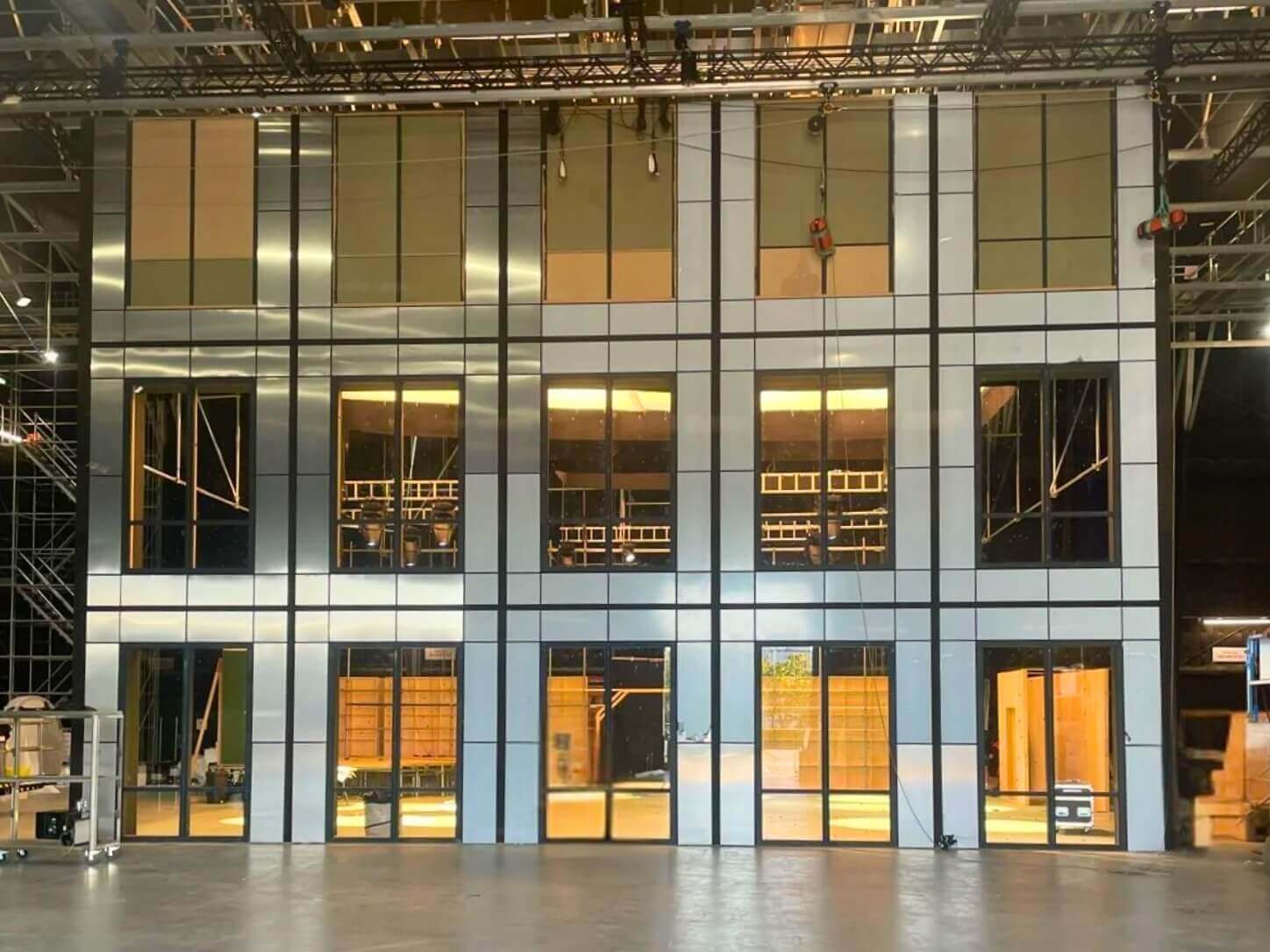
Cleaner: three-storey façade under construction.

Best Home Cook: completed studio set.
Breakaway glass and SFX glazing
Alongside the main Cleaner façade, a separate single-storey section was built for the sequence in which Joey breaks through a window. It could be prepared specifically for the stunt without damaging the principal build.
The apparently shattered pane was not glass. It was an 8 mm sheet of polycarbonate. On the day of filming, the production’s SFX team drilled holes to represent bullet strikes and worked radiating crack lines into the surface by hand. On screen, it reads as a damaged high-rise window. In the studio, it was a controlled effect created for one precise moment.

Cleaner: polycarbonate pane prepared for the damaged-window shot.
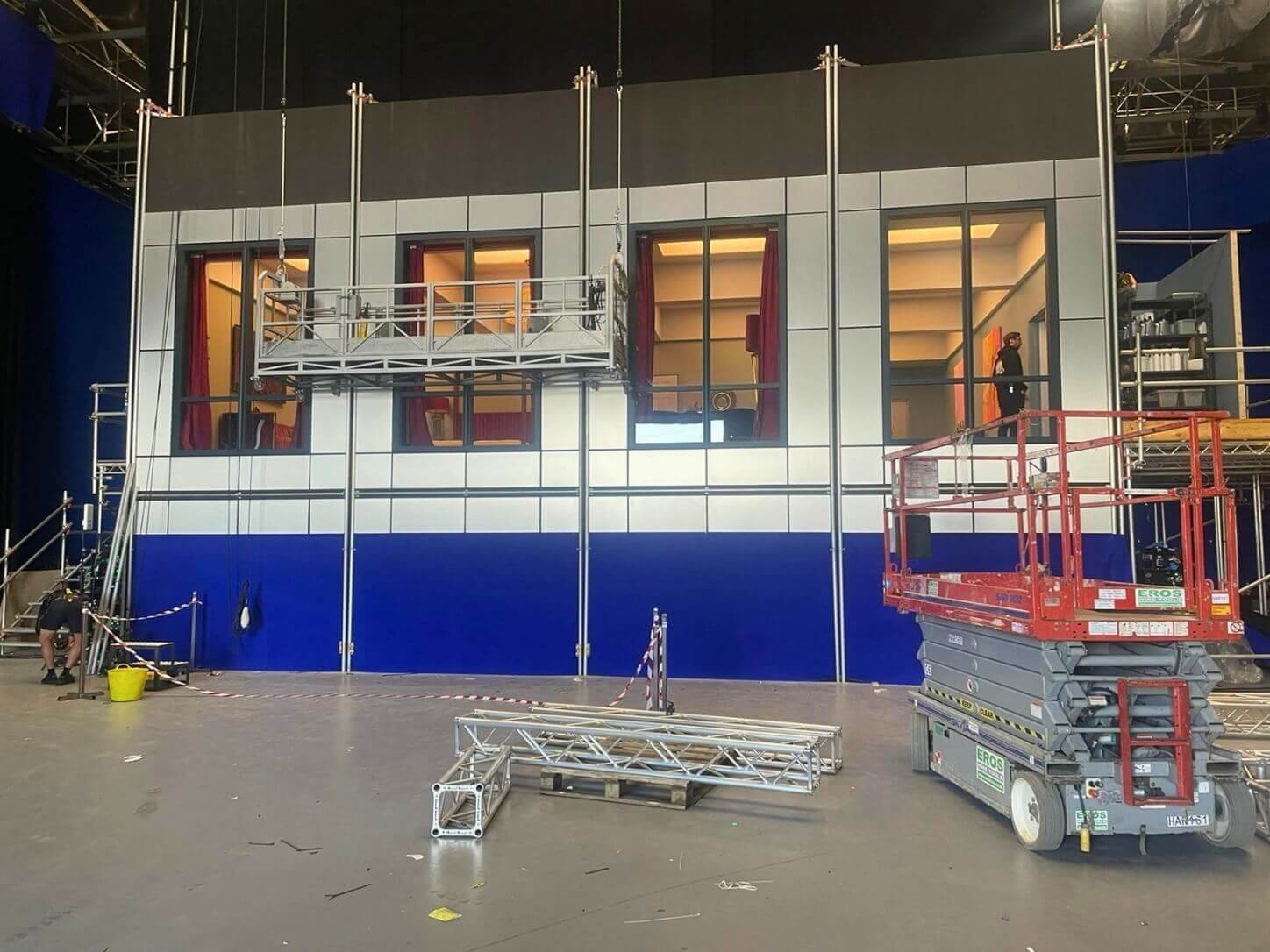
Cleaner: separate façade section in front of the blue screen.
Breakaway props work on the same principle. Traditional sugar glass is made by heating sugar, water and glucose before casting it in moulds. Because heat and moisture can affect it, modern productions may instead use specialist resins that offer greater consistency during filming.
Totom has supplied breakaway props for productions including EastEnders and Midsomer Murders. Whatever the material, the aim is the same: to create something that looks real until the exact moment it needs to break.
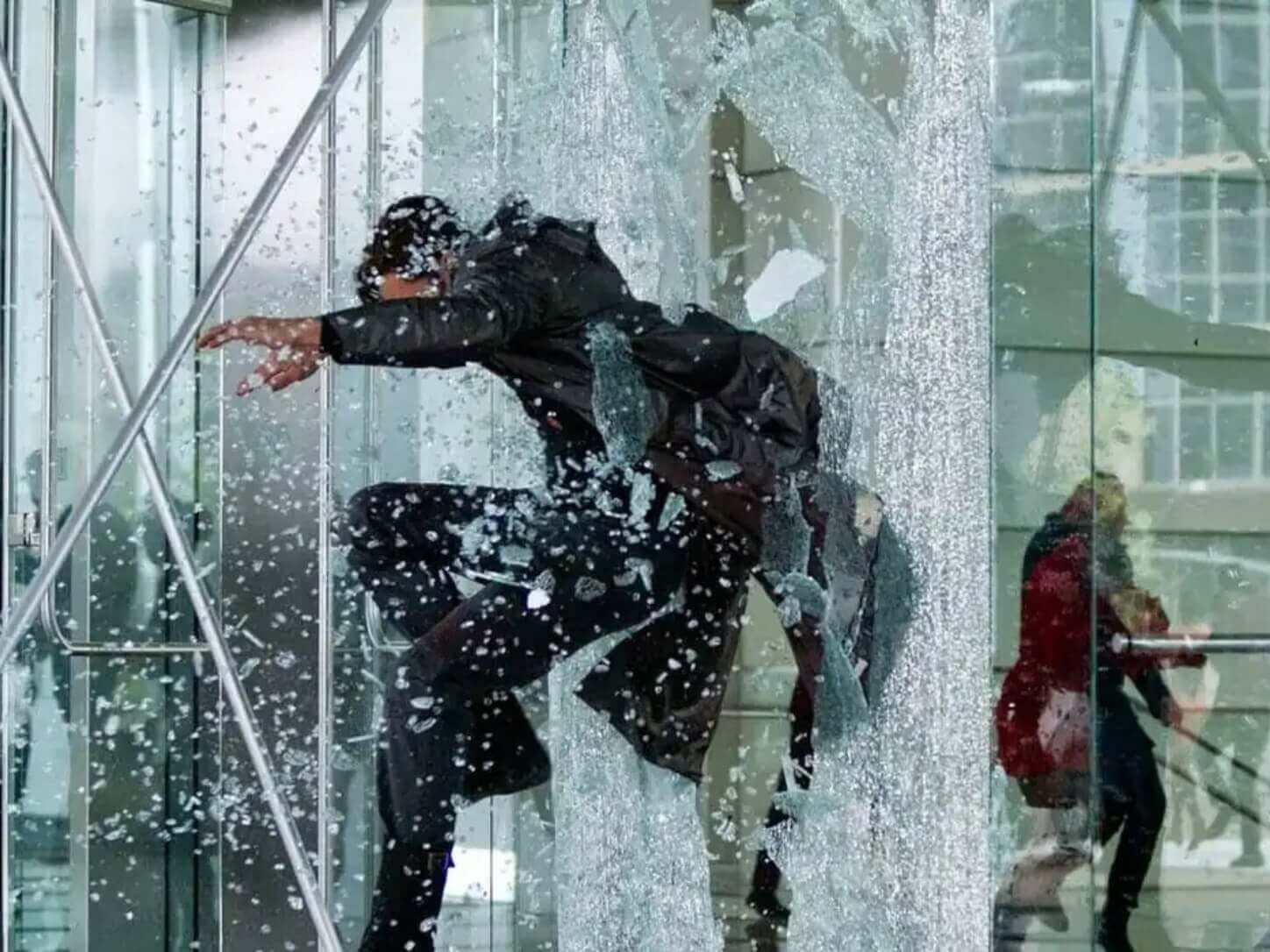
Breakaway glazing: stunt performer passing through a shattering panel.
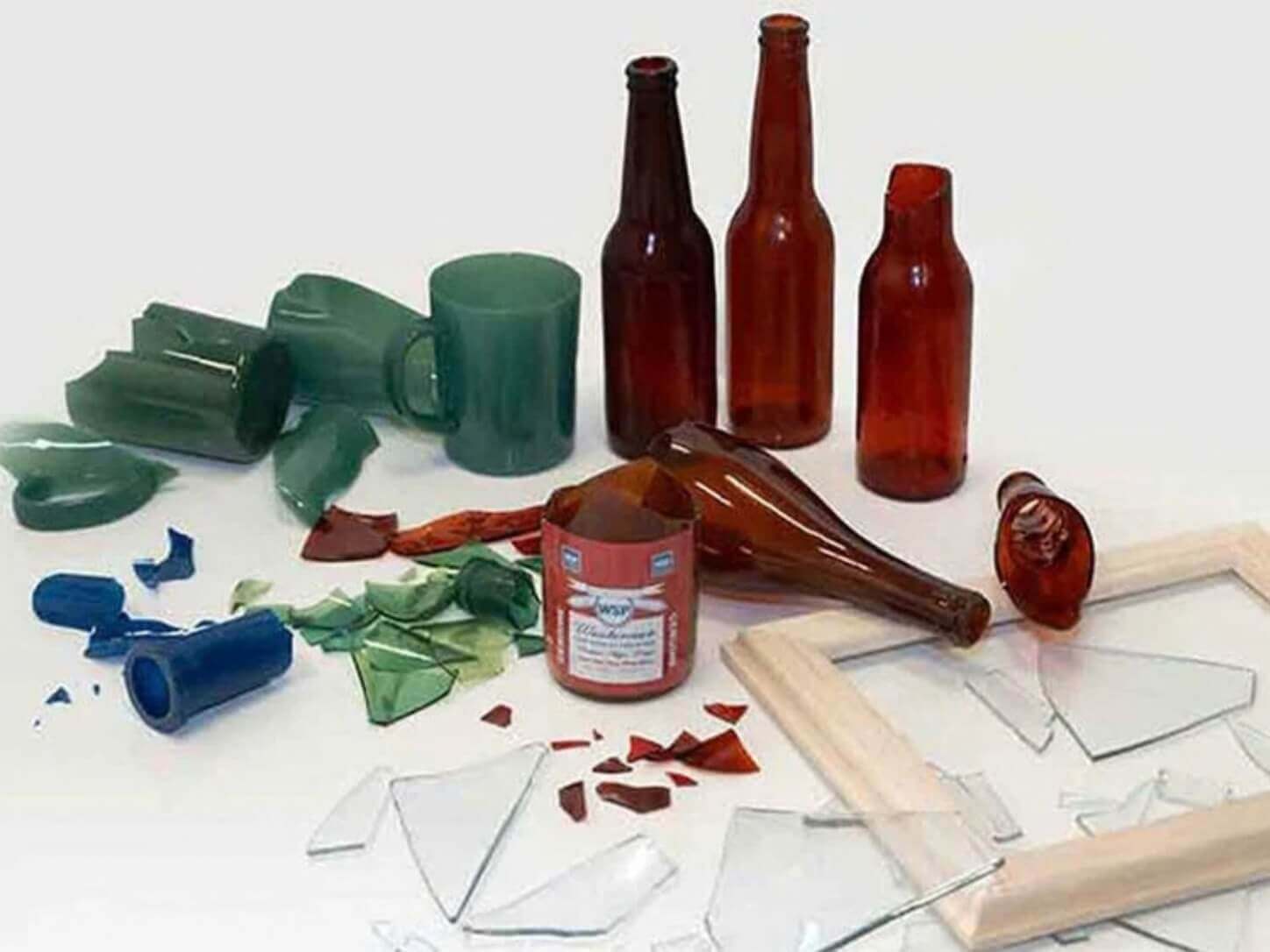
Breakaway props: sugar-glass bottles, mugs and window panes.
Glass walls: dividing a set without closing it
Windows usually create a view from inside to outside. In Hijack, glass was used differently, creating views through the set itself.
The office was designed as a series of rooms within rooms, divided by transparent walls. Characters could occupy separate spaces while remaining visible to one another, and the camera could look through several areas towards the virtual-production view of London.
The walls were formed from panels of toughened glass approximately one metre wide. Each panel was fitted into narrow channels in the floor and ceiling, while mitred corners and discreet clear strips helped the joins disappear.
“Each pane was heavy, so every one had to be carefully moved into position by two people.”
Clinton, Construction Manager
The apparent simplicity depended on careful handling and alignment. The transparent rooms also supported the story, creating a visually open office where people were physically separated but constantly in view.

Hijack: glass partitions during installation.

Hijack: completed office set on screen.
Recreating architectural glass
Sometimes a window must convince the audience that it has belonged to a building for decades, and sometimes centuries.
For Angels & Insects, the challenge was to transform the porte-cochère at Arbury Hall into a Victorian conservatory for the butterfly sequence. The location was an Elizabethan mansion transformed in the Gothic Revival style during the eighteenth century, so the new glazing needed to sit convincingly within the existing architecture.
A timber floor was constructed over the gravel to create a level base. Each Gothic arch was then individually templated, allowing the corresponding window section to be made in Totom’s workshop before being scribed into position on location. Laminated glass provided the required safety, while traditional lamb’s-tongue mouldings helped the glazing bars echo the hall’s existing windows.
“The key was making a template for every arch, so each pane of glass would fit perfectly.”
Tom Overton, Owner & Founder
Once installed and sealed, the new conservatory was ready for the release of hundreds of butterflies.

Angels & Insects: the original historic façade.

Angels & Insects: the new glazed structure on screen.
For the later series of Bad Girls, the challenge was larger still. The original location at HM Prison Oxford had been repurposed as a hotel, so both the prison exterior and its multi-level interior had to be recreated.
At the end of the prison wings stood an arched window around 40 feet tall. It gave the long view through the landings a bright focal point and made the studio set feel as imposing as the original prison. Timber sections were installed from the bottom upwards, followed by individual panes of laminated safety glass.
In both productions, the glazing did more than fill an opening. It carried the architectural character of the location.

Bad Girls: the original Oxford prison interior.
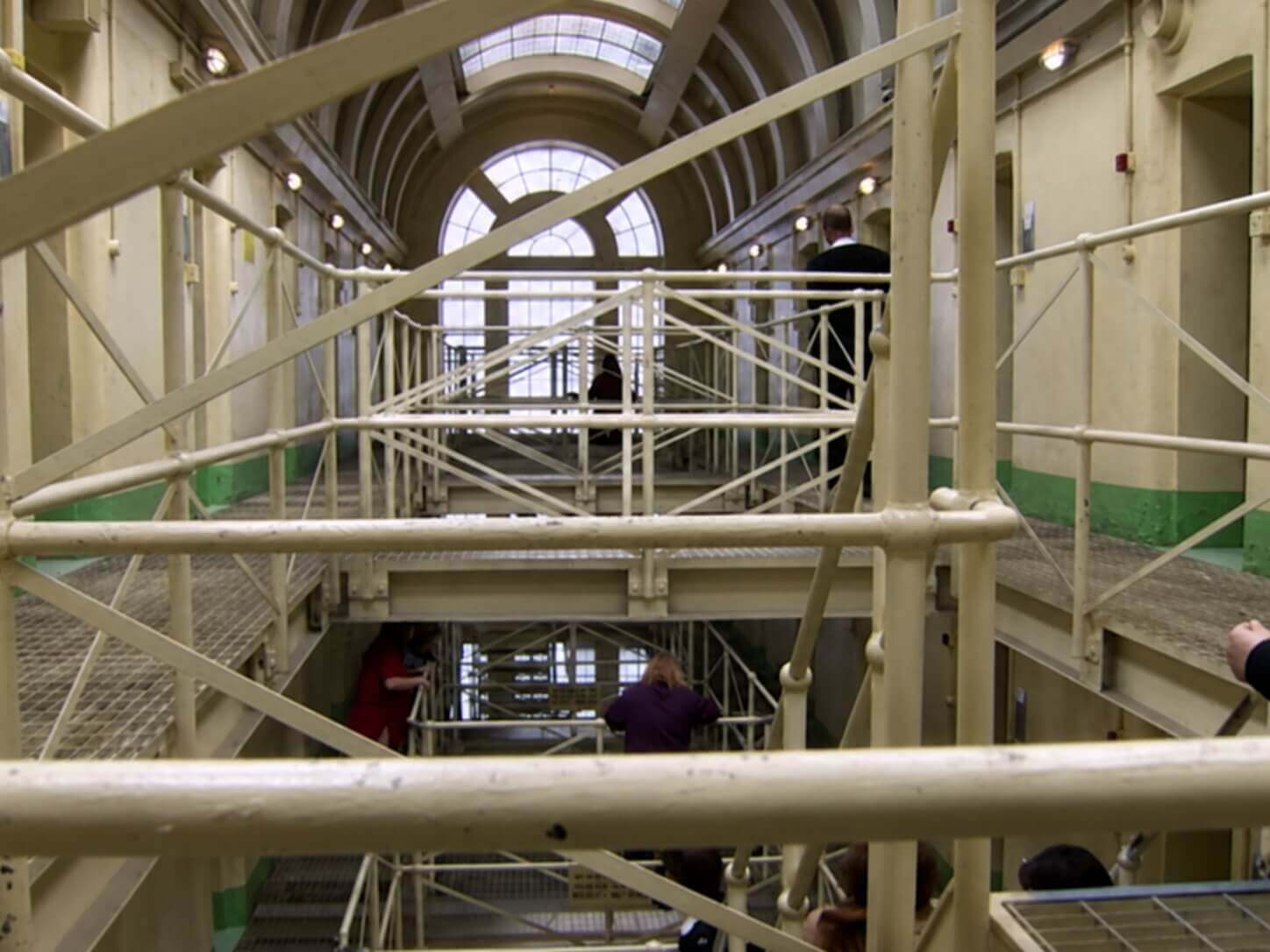
Bad Girls: the recreated studio interior.
Acrylic: when the best glass is not glass
Real glass is not always the most useful material. Acrylic is lighter and easier to form, making it valuable for overhead features, illuminated panels and complex curves.
The penthouse roof in Man vs Baby, for example, was built as an acrylic light box. It read as part of the glazing while also helping create the controlled light needed inside the set. The upper windows and rooflights in Best Home Cook also used acrylic alongside timber construction, visually matching the darker metal-framed elements below.
For a Heinkel bomber build with Brian Sykes, Totom formed acrylic within a metal framework to recreate the curved gun-turret dome, a shape that would have been extremely difficult to achieve in conventional flat glass.

Man vs Baby: illuminated acrylic light-box ceiling.
Choosing glass for the story
It might need to remain safely in place above a performer, withstand regular use at floor level, disappear between two rooms or appear to break at exactly the right moment. It might not be glass at all.
When the choice is right, the audience sees a prison, penthouse, historic conservatory or high-rise office. They do not see the templates, channels, safety decisions and planning behind it.

Cleaner: completed high-rise façade on screen.