Finding Inspiration Through Story, Atmosphere and Sketching
When Production Designer Brian Sykes begins a project, his first question is not what the set should look like. It is, “What story am I telling?” From there, he develops storyboards and drawings that begin to shape not just the scenery, but the way the piece will be shot and felt on screen.
That is what makes Brian’s approach so interesting. His charcoal sketches are not neat technical plans. They are full of atmosphere, perspective and mood. They also almost always include a figure. As Brian notes through a quote he values from Toulouse Lautrec, “Only the human figure exists.” In other words, the set is never the point on its own. It exists to support the people within it.
That thinking can lead him in very different directions depending on the production. In Inside No. 9: The Understudy, Brian drew inspiration from Orson Welles’ Film The Trial, in which the ceiling features a crisscrossing structure that looms dangerously overhead. That same sense of menace fed into the gloomy basement setting of The Understudy, where the glass bricks above become part of the atmosphere.
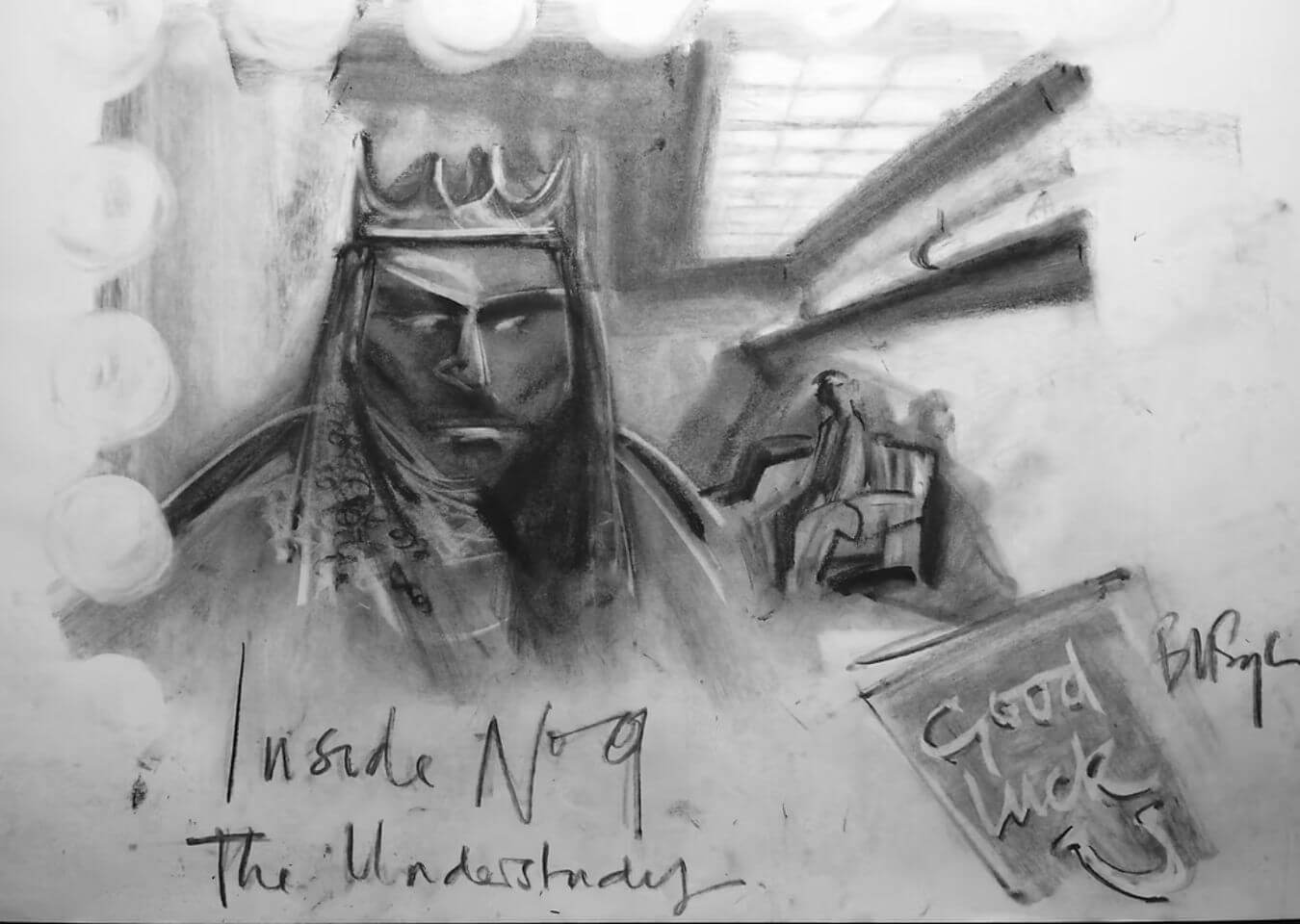
Brian Sykes’ sketch for The Understudy, where looming overhead structure and theatrical imagery helped shape the atmosphere.
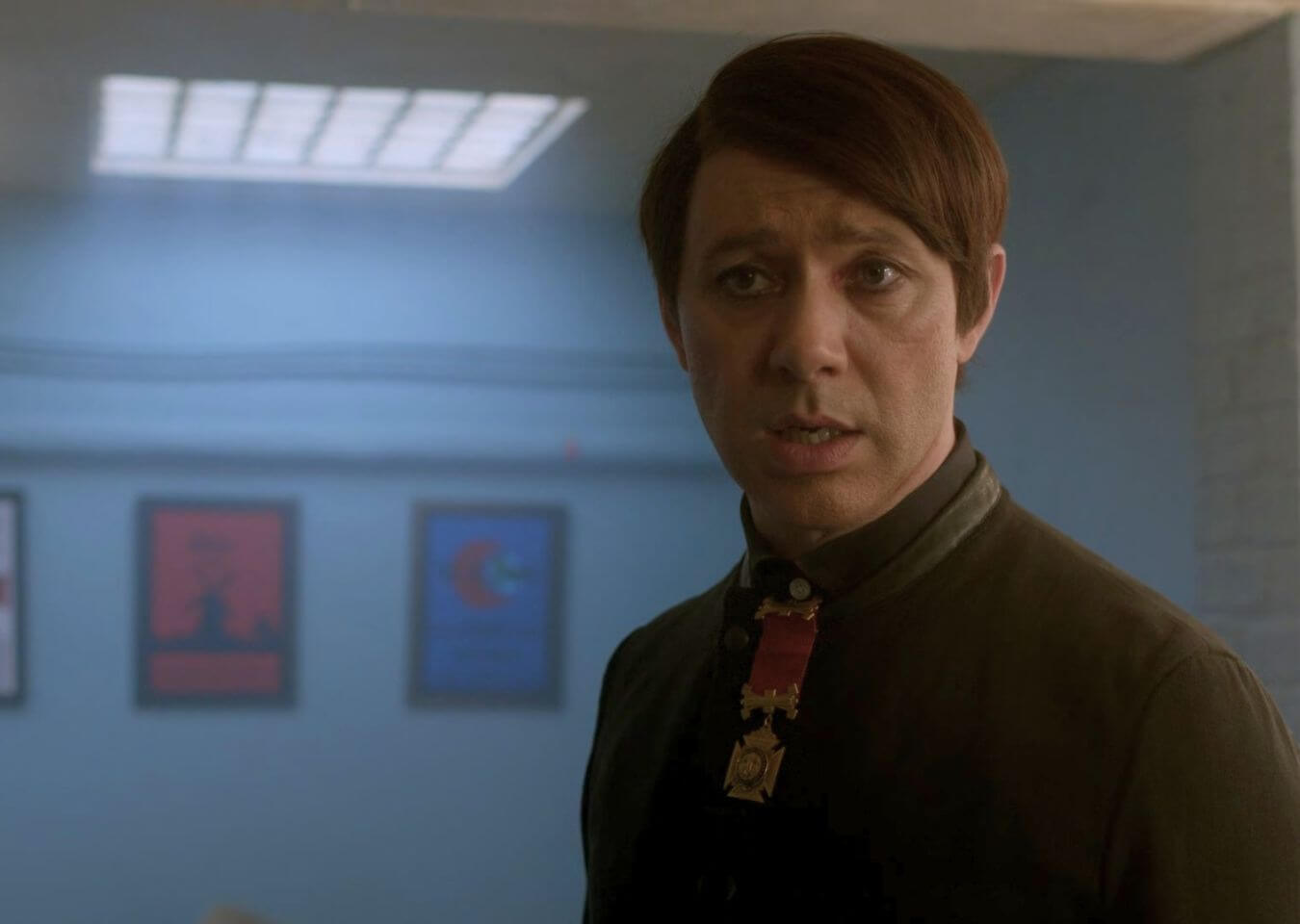
The finished basement setting in The Understudy, where the overhead glass bricks add pressure and unease to the scene.
For Life on Mars, Brian found inspiration in All the President’s Men. A 70s car park ceiling, heavy concrete and hung low over the action, became the starting point for the station interior. It was not simply about reproducing a look. The oppressive ceiling added tension and perspective, while the figures in the drawing carried the mood and period.

Brian Sykes’ sketch for Life on Mars, inspired by the oppressive 70s concrete ceiling in All the President’s Men.
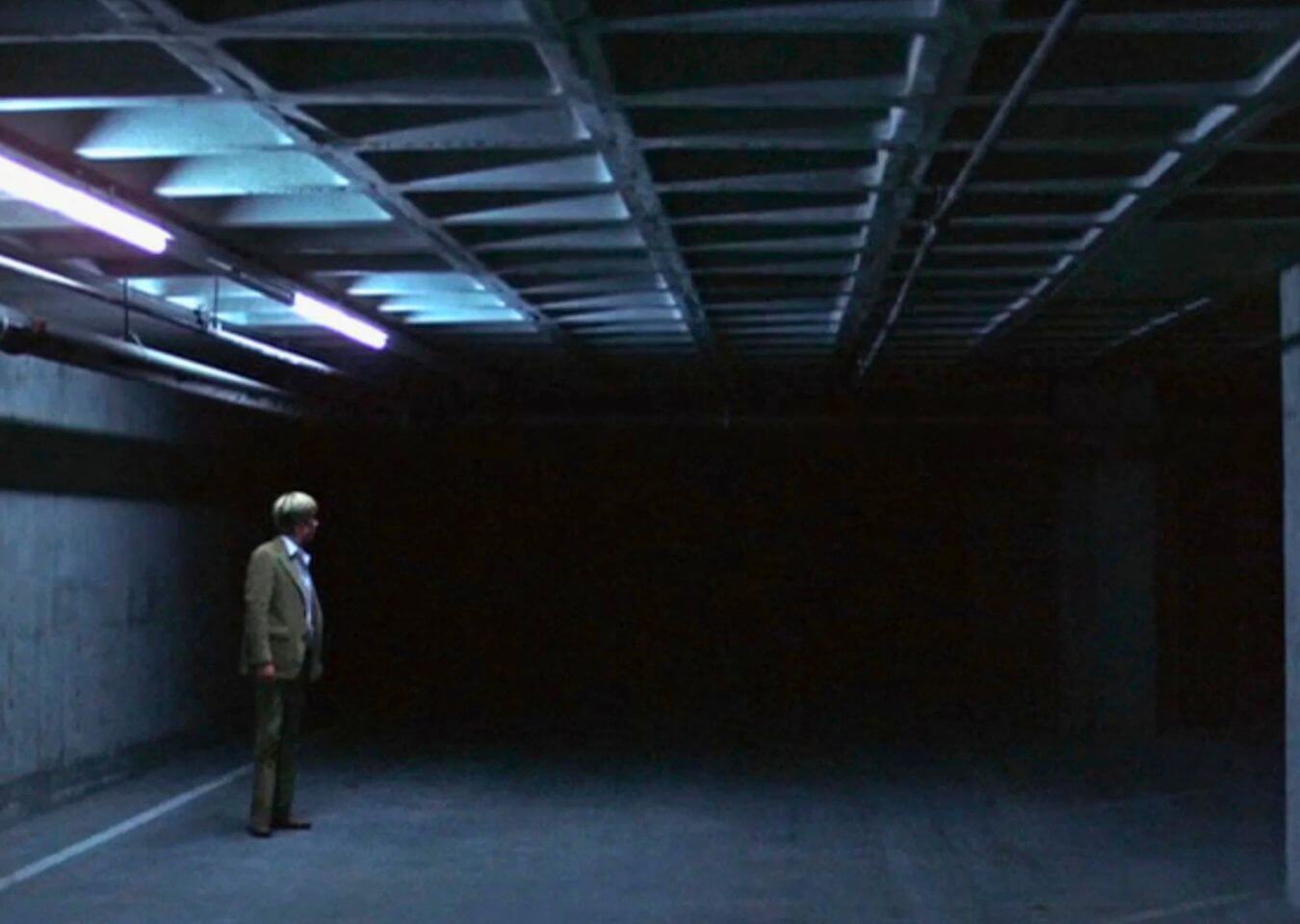
A visual reference from All the President’s Men, which helped shape the station interior in Life on Mars.
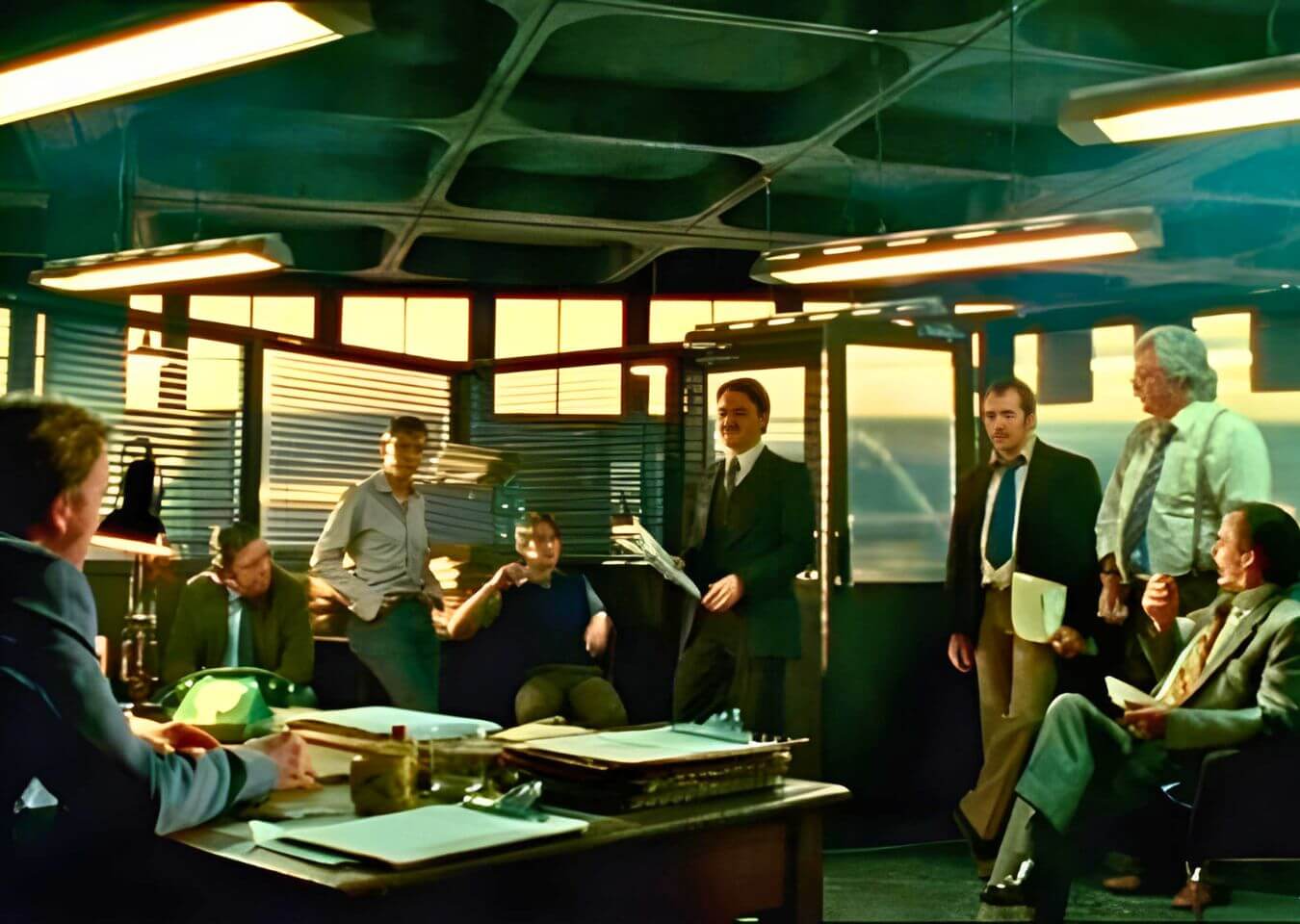
The finished station interior for Life on Mars, where the low ceiling added tension and depth to the scene.
For Out of Her Mind, created with Sara Pascoe, the influence came from Alice’s Adventures in Wonderland. Brian developed an exaggerated, unsettling world to reflect the character’s spiralling thoughts and uncertain grip on reality. The scale is skewed, and she isn’t sure what is real and what is imagined, reflecting her heightened state of mind. To reinforce that surreal feeling, Brian used an empty Ealing Studios, in which sets were built and then revealed as merely scenery, with reality constantly being questioned. Even the living room, with its towering, overflowing bookshelves, became part of the rabbit hole.

Brian Sykes’ sketch for Out of Her Mind, imagining a skewed, unsettling interior inspired by Alice’s Adventures in Wonderland.

Literary reference from Alice’s Adventures in Wonderland, which helped inspire the surreal world of Out of Her Mind.

The finished set. All the book smarts in the world, and she still can’t get through a family dinner.
For Red Riding Hood, Brian’s inspiration came directly from nature. The Wolf’s Lair was intended to feel magical rather than realistic, so he went sketching in the forest, looking closely at forms and textures first hand. The finished structure had to be freestanding because rigging was not possible in the studio. That practical constraint led to the final design of an ancient root system spreading out in all directions to create an enchanting interior.
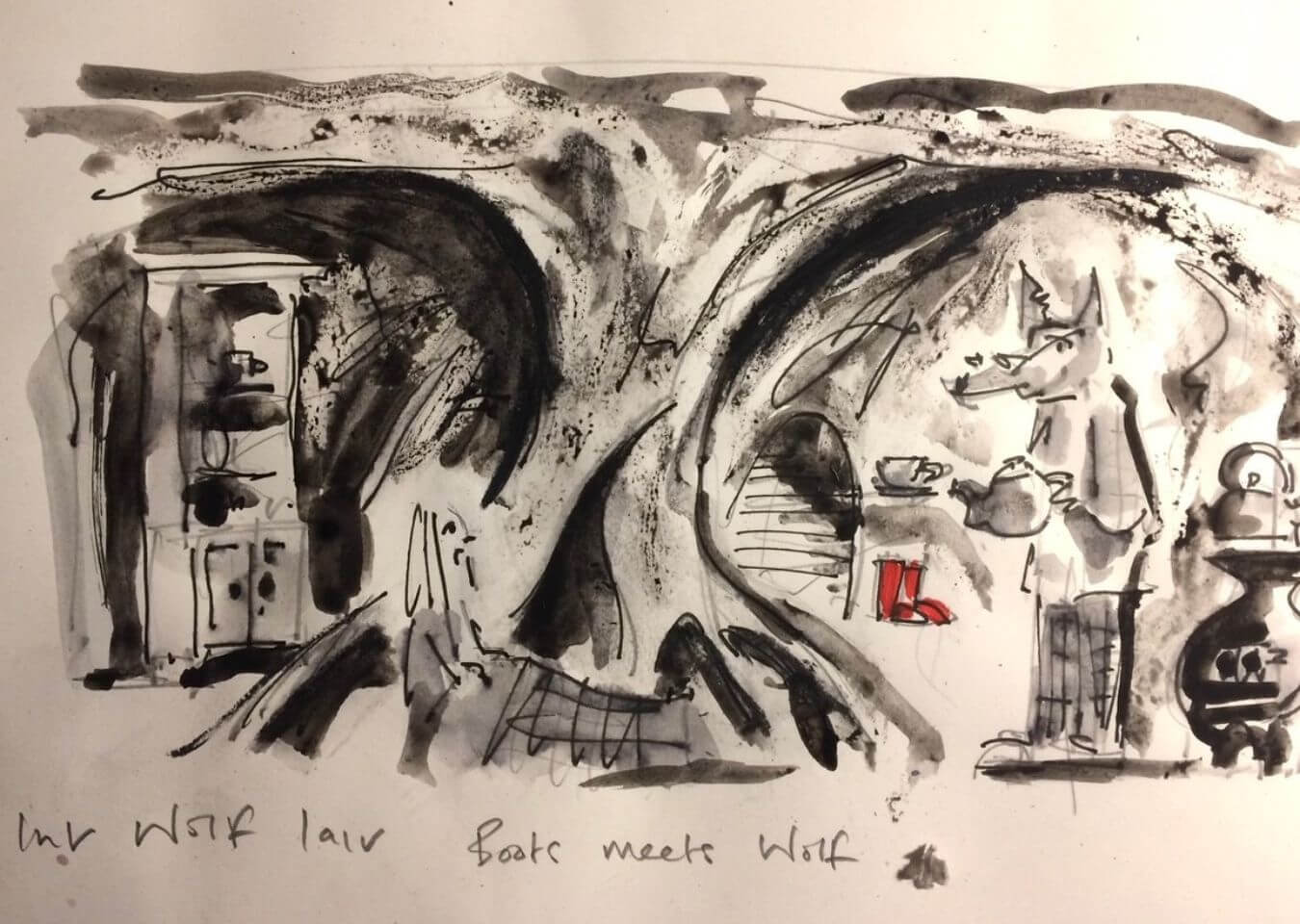
Brian Sykes’ sketch for the Wolf’s Lair in Red Riding Hood, developed from forms and textures found in the forest.

The finished Wolf’s Lair set, where the ancient root system became both the visual idea and the structural solution.

The Wolf’s Lair on screen in Red Riding Hood, transformed from sketch into an enchanting freestanding interior.
What links all three projects is that Brian’s inspiration does not stay abstract for long. Film, literature and landscape are all filtered through drawing, then turned into spaces that can be built, shot and inhabited. It is a good reminder that research is not always about collecting references. Sometimes it begins with mood, memory and a pencil on paper.
This interview forms part of our wider campaign exploring how research shapes set construction. You can read the main blog here.
If you’re working on a production and want to talk to us about the build, get in touch at info@totom.co.uk