The Fiery Magic in Set Design
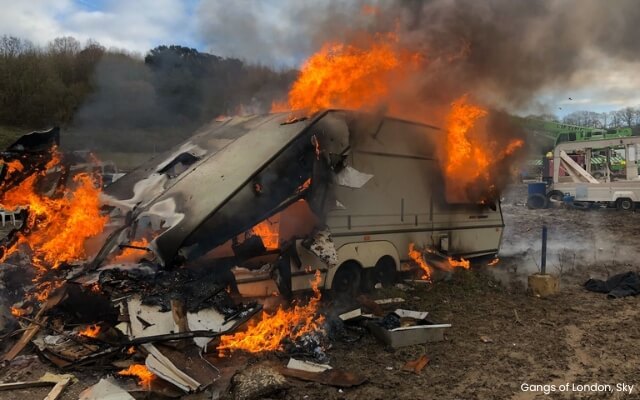
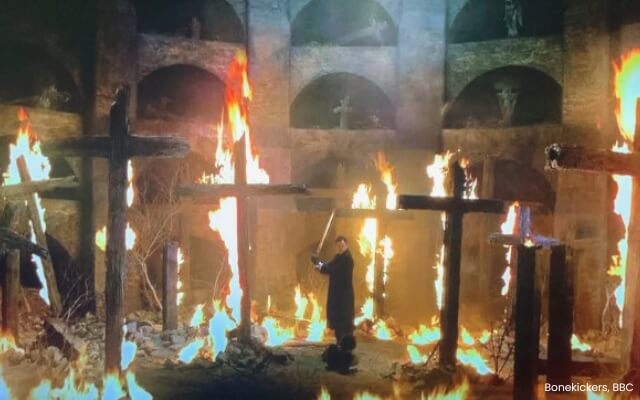
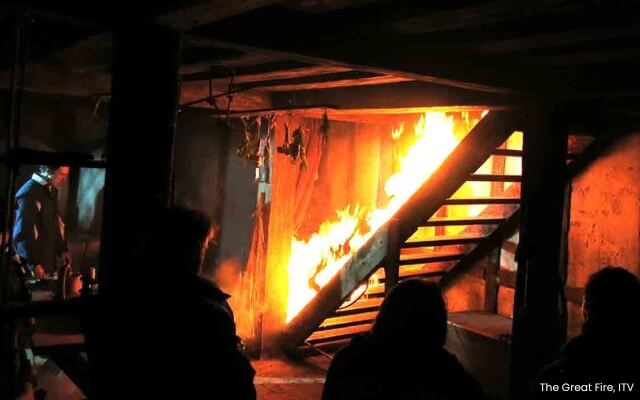
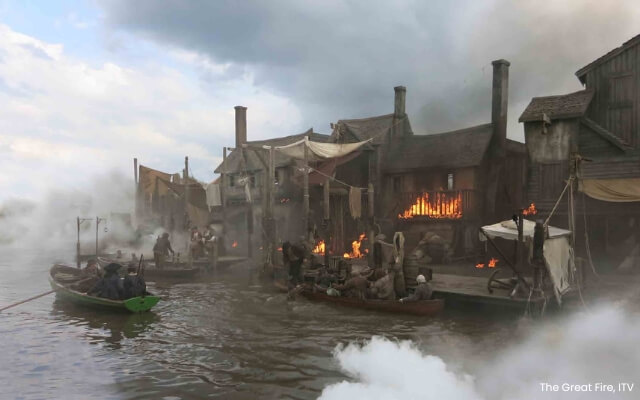
Fire has been a captivating element in storytelling for centuries, and its use in TV and Film sets adds a powerful layer of drama, tension, and spectacle to cinematic experiences. Whether it’s a raging inferno in an action movie or the warm, flickering glow of a fireplace in a cosy period drama, fire plays a crucial role in enhancing the visual and emotional impact of a scene. In this blog, we’ll explore the mesmerizing use of fire on TV and film sets, shedding light on its creative potential while touching on essential considerations for set construction companies like Totom. This blog explores 3 sets Totom Construction have built where fire has been used, The Great Fire, Gangs of London and Bonekickers.

Gas-Fuelled Flames: Controlled gas jets and propane burners integrated into production design can be used to create controlled flames that can be adjusted to match the desired intensity and height. These systems are commonly used for scenes involving torches, candles, or fireplaces.
Flame Bars: Flame bars are portable devices that produce realistic flames and can be positioned strategically on set during the construction stage or post-build. They are often used for outdoor scenes or when a more dynamic fire effect is required.
Fire Gels and Glycerine: Non-toxic fire gels or glycerine can be used to create safe, controllable flames on set. These substances burn at lower temperatures than real fire, reducing the risk of injury or damage to set or props.
Practical Effects: In some cases, Production Designers incorporate practical effects practical effects like burning materials, controlled pyrotechnics, and fire-resistant props may be used to create convincing fire effects. These require careful planning and coordination with fire safety experts and the set construction company.
Unleashing Creative Potential
Apart from the technical aspects, fire in set design unleashes a realm of creative possibilities. Its presence can symbolise a wide range of emotions and story elements:
Drama and Conflict: Fiery explosions and blazing infernos symbolize conflict and danger, adding tension and excitement to action sequences.
Romance and Coziness: A flickering fireplace or candlelit dinner scenes exude warmth, intimacy, and romance.
Mystery and Intrigue: Dimly lit, shadowy scenes with candles or torches create an air of mystery and suspense, transporting the audience to another world.
Symbolism: Fire can be a potent symbol in storytelling, representing transformation, purification, and even destruction.
Sparking Creativity
While safety considerations are crucial when building a set, they don’t have to be a dampener for creativity. Here are some key considerations:
Collaboration is Key: A well-coordinated team of experts, including fire safety personnel, can ensure both safety and creative success in production design and set construction.
Location Matters: Opting for controlled environments like sound stages can provide better fire safety and lighting control.
Materials and Treatments: Using fire-resistant materials and flame retardants on props and costumes can mitigate risks.
Conclusion
Fire, as an elemental force, plays a vital role in enhancing storytelling in TV and film. Its dynamic and evocative nature allows it to convey a wide range of emotions and themes. By carefully considering the creative potential of fire and implementing safe practices, a scenic construction company can harness this captivating element to craft unforgettable cinematic experiences. When done right, the result is a visually stunning and emotionally gripping experience that leaves a lasting impression on the audience.
Photos from:
Gangs of London, Sky, 2018, Production Designer: Matt Gant
The Great Fire, ITV, 2014, Production Designer: Dominic Hyman
Bonekickers, BBC, 2008, Production Designer: Brian Sykes
Construction by Totom